New Approaches in Educational Management

New Approaches in Educational Management

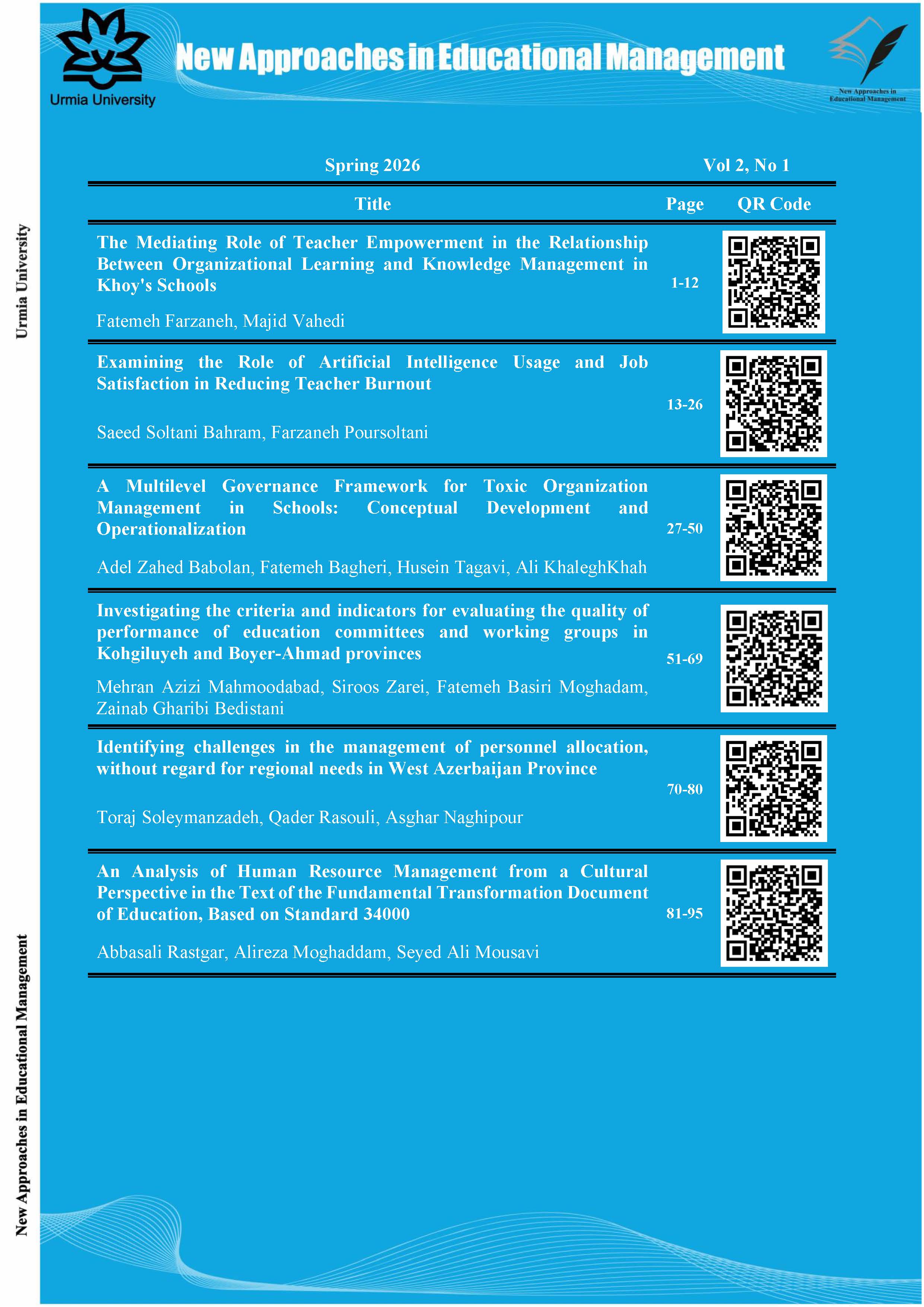
Current Issue: Volume 2, Issue 1 - Serial Number 5, Spring 2026, Pages 1-95 (Spring) 

Keywords Cloud

  • teachers
  • education
  • Job Burnout
  • job satisfaction
  • Conscientiousness
  • Use of Artificial Intelligence
  • Organizational Cynicism
  • creativity
  • practicum
  • Knowledge management
  • Management
  • online education
  • psychological well-being
  • Persian language
  • Cognitive strategy
  • Primary school
  • First grade
  • Principal
  • Managers
  • Corona
  • Tabriz University
  • Lived experience
  • Technology Literacy
  • Learner-Centered
  • Teacher-Centered
  • Teaching Method
  • Organizational Citizenship Behavior (OCB)
  • Cyber Loafing
  • Civic Virtue
  • Perceptual Factors
  • Behavioral Factors
  • Structural Factors
  • Vandalism
  • Justice
  • Belief in a just world
  • Teacher Justice
  • Perception of learning environments
  • Spirituality in the Work Environment
  • Moral Atmosphere
  • Responsibility
  • Accountability
  • Perceived Behavioral Control
  • Entrepreneurship
  • Subjective Norms
  • Space
  • Educational Services
  • Instruction
  • Cooperative Problem Solving
  • Elementary School Students
  • Primary Teachers
  • School
  • Human Resource Improvement
  • Work System with High Commitment
  • Employee Performance
  • Organizational Trust
  • Organizational Climate
  • Distributed Leadership
  • Perception of Authentic Leadership
  • Entrepreneurial Enthusiasm
  • Smart Technology
  • School Principals
  • Adult participation in literacy courses
  • Media
  • Roots of Illiteracy
  • The Future of Physical Education
  • Opportunity
  • Interpersonal Conflicts
  • Occupational Conflicts
  • Conflict Resolution and Management Strategies
  • Organizational Change
  • Perceived Organizational Support
  • Organizational Commitment
  • Job Self-Efficacy
  • Hidden curriculum
  • Positive and negative teaching
  • Professional competencies
  • Student-teacher
  • Quality of learning
  • Upper Secondary School
  • 21st century skills
  • 5E model
  • PhET platform
  • Virtual laboratory
  • Blended learning
  • Science education
  • Elementary Students
  • Halabja
  • Torrance Theory
  • Sepah Bank
  • Organizational Performance
  • Organizational learning
  • Evaluation Criteria
  • Performance Quality
  • Committees and Working Groups
  • Kohgiluyeh and Boyerahmad
  • Workforce
  • Human Resource Allocation Management
  • Regional Needs
  • Cultural Approach
  • Fundamental Transformation Document
  • Index 34000
  • Urmia
  • Human Resources
  • attitude
  • job performance
  • contextual factors
  • self-efficacy
  • professional development
  • gender