رویکردهای نوین در مدیریت آموزشی

رویکردهای نوین در مدیریت آموزشی

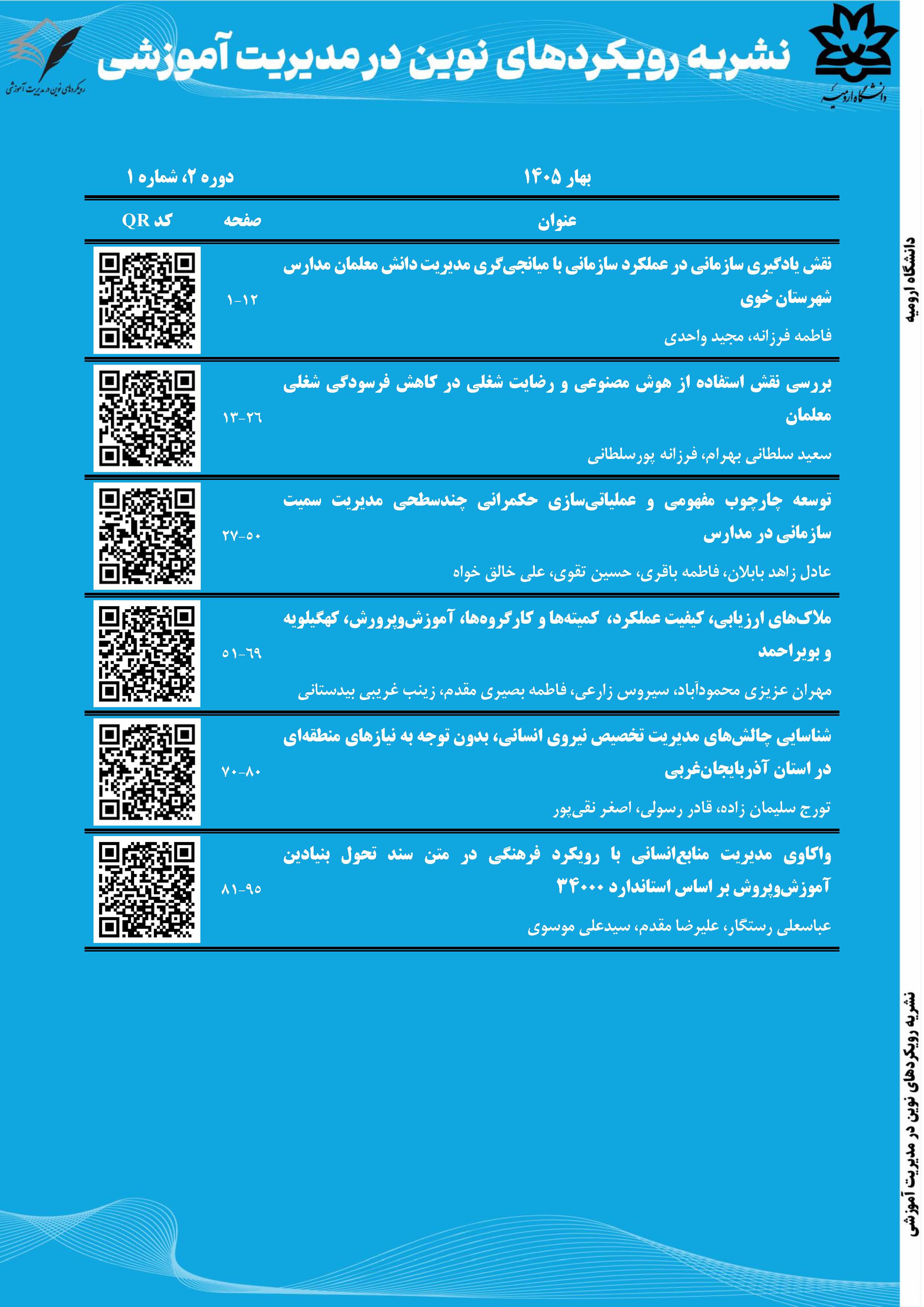
شناسایی چالش‌های مدیریت تخصیص نیروی انسانی، بدون توجه به نیازهای منطقه‌ای در استان آذربایجان‌غربی

نوع مقاله : مقاله پژوهشی

نویسندگان
گروه علوم تربیتی، دانشکده انسانی، دانشگاه آزاد اسلامی واحد ارومیه، ارومیه، ایران.
چکیده
هدف: پژوهش حاضر با هدف شناسایی چالش‌های مدیریت تخصیص نیروی انسانی بدون در نظر گرفتن نیازهای منطقه‌ای در استان آذربایجان غربی انجام شد.
روش تحقیق: مطالعه حاضر به روش آمیخته انجام شد. در بخش کیفی، داده‌ها از طریق مصاحبه نیمه‌ساختاریافته با ۱۵ کارشناس منابع انسانی جمع‌آوری و به روش تحلیل مضمون بررسی شدند. پرسشنامه محقق‌ساخته‌ای بر اساس مضامین کیفی طراحی و با تحلیل عاملی اکتشافی و تأییدی اعتبارسنجی شد. شاخص KMO برابر با ۰.۹۷ و آزمون بارتلت معنادار (۰.۰۵>P) بود که نشان‌دهنده کفایت داده‌ها برای تحلیل عاملی است. نمونه ۲۰ نفره به‌صورت هدفمند و از افراد متخصص انتخاب شد. پایایی پرسشنامه با آلفای کرونباخ ۰.۷۳ تأیید گردید. تحلیل داده‌های کمی با نرم‌افزار لیزرل ۱۵ انجام شد.
یافته‌ها: نتایج مرحله کیفی منجر به شناسایی پنج مضمون اصلی شامل سیاست‌گذاری ناکارآمد، بی‌توجهی به توزیع متوازن نیروی انسانی، چالش‌های اجتماعی، مشکلات اقتصادی و ناکارآمدی برنامه‌ریزی شد. این مضامین دربرگیرنده 10 مضمون فرعی و 15 مقوله بودند. در تحلیل عاملی، شاخص KMO بالاتر از 0.7 و آزمون بارتلت معنادار بود. همچنین، بار عاملی همه مؤلفه‌ها بیشتر از 0.4 به‌دست آمد.
نتیجه‌گیری: یافته‌ها نشان می‌دهد که چالش‌های موجود در تخصیص نیروی انسانی ناشی از نبود سیاست‌گذاری منطقه‌محور و عدم استفاده از رویکرد علمی در برنامه‌ریزی منابع انسانی است؛ بنابراین، بازنگری در سیاست‌ها و طراحی الگوی بومی برای توزیع عادلانه نیروها ضروری است.
کلیدواژه‌ها

عنوان مقاله English

Identifying challenges in the management of personnel allocation, without regard for regional needs in West Azerbaijan Province

نویسندگان English

Toraj Soleymanzadeh
Qader Rasouli
Asghar Naghipour
Department of Educational Sciences, Urmia Branch, Islamic Azad University, Urmia, Iran
چکیده English

Objective: This study aimed to identify the challenges of workforce allocation management without considering regional needs in West Azerbaijan Province.
Methodology: The present study employed a mixed-methods approach. Qualitative data were collected via semi-structured interviews with 15 human resource experts and analyzed thematically. A researcher-made questionnaire, developed from qualitative themes, was validated using exploratory and confirmatory factor analysis. The KMO index was 0.97, and Bartlett’s test was significant (Sig < 0.05), confirming suitability for factor analysis. Despite a small purposive sample of 20 specialized respondents, the questionnaire’s reliability was acceptable (Cronbach’s alpha = 0.73). Qualitative data were analyzed thematically, and quantitative data analyzed with confirmatory factor analysis using LISREL 15.
Results: The qualitative phase led to the identification of five main themes: inefficient policymaking, neglect of balanced workforce distribution, social challenges, economic issues, and planning inefficiencies. These themes encompassed 10 sub-themes and 15 categories. In the factor analysis, the KMO index was above 0.7, and Bartlett's test was significant. Furthermore, all factors exceeded 0.4.
Conclusion: The findings indicate that the existing challenges in workforce allocation stem from the lack of region-based policymaking and the absence of a scientific approach to human resource planning. Therefore, revising current policies and designing a localized model for equitable workforce distribution is essential.

کلیدواژه‌ها English

Human Resource Allocation Management
Workforce
Regional Needs
منابع
خدامرادی، طیبه؛ و حسین زاده؛ مهناز. (1400). بررسی ساختار حکمرانی توسعه پایدار مناطق محروم ایران با استفاده از تحلیل شبکه‌های اجتماعی. سیاستگذاری عمومی، 7(3)، 99-115. https://sid.ir/paper/1050238/fa.
دشتی یونجالی، محسن؛ رهبر، رضا؛ و  بیگلو، هادی. (1392). نقش فناوری اطلاعات در توسعه مناطق محروم (روستایی). اولین کنفرانس بین المللی حماسه سیاسی (با رویکردی بر تحولات خاورمیانه) و حماسه اقتصادی (با رویکردی بر مدیریت و حسابداری). https://civilica.com/l/5100/
علی محمدی، احمد؛ محمدی، نبی اله؛ حمیدی، ناصر؛ و دورودی، هما. (1400). مدل نگهداشت پزشکان متخصص در استان‌های کمتر توسعه یافته و مناطق محروم. مدیریت پرستاری، 10(1)، 106-118. SID. https://sid.ir/paper/392486/fa.
کمالی، یحیی. (1393). بررسی نقش تمرکز زدایی در تحقق سلامت اداری. سیاست‌های راهبردی و کلان، 2(5)، 111-132. https://www.jmsp.ir/article_6264.html
صائبی، محمد. (1381). روندها و چالش‌های مدیریت منابع انسانی در بخش دولتی. مدرس علوم انسانی، 6(3)، 67-82. SID. https://sid.ir/paper/7031/fa
 
References:
Alzoubi, H. M., Ghazal, T. M., Sahawneh, N., & Al-kassem, A. H. (2022). Fuzzy assisted human resource management for supply chain management issues. Annals of Operations Research. https://doi.org/10.1007/s10479-021-04472-8
Anwar, G., & Abdullah, N. N. (2021). The impact of Human resource management practice on Organizational performance. International Journal of Engineering, Business and Management (IJEBM), 5(1), 35–47. https://doi.org/10.22161/ijebm.5.1.4.
Chowdhury, S., Dey, P., Joel-Edgar, S., Bhattacharya, S., Rodriguez-Espindola, O., Abadie, A., & Truong, L. (2023). Unlocking the value of artificial intelligence in human resource management through AI capability framework. Human Resource Management Review, 33(1), 100899. https://doi.org/10.1016/j.hrmr.2022.100899.
Hamouche, S. (2023). Human resource management and the COVID-19 crisis: Implications, challenges, opportunities, and future organizational directions. Journal of Management & Organization, 29(5), 799–814. https://doi.org/10.1017/jmo.2021.15.
Imani, M. M., Nouri, P., Jalali, A., Dinmohammadi, M., & Rezaei, F. (2023, August). A social accountable model for Iranian dentistry sciences education system: a qualitative study. In Frontiers in Education (Vol. 8, p. 993620). Frontiers Media SA. https://doi.org/10.3389/feduc.2023.993620.
Li, D., Zhou, Z., Si, Y., Xu, Y., Shen, C., Wang, Y., & Wang, X. (2018). Unequal distribution of health human resource in mainland China: what are the determinants from a comprehensive perspective? International Journal for Equity in Health, 17, 1–12. https://doi.org/10.1186/s12939-018-0742-z.
Luo, J., Zhuo, W., & Xu, B. (2024). The bigger, the better? Optimal NGO size of human resources and governance quality of entrepreneurship in circular economy. Management Decision, 62(8), 2472–2509. https://doi.org/10.1108/md-03-2023-0325.
Rój, J. (2020). Inequality in the distribution of healthcare human resources in Poland. Sustainability, 12(5), 2043. https://doi.org/10.3390/su12052043.
Speybroeck, N., Paraje, G., Prasad, A., Goovaerts, P., Ebener, S., & Evans, D. B. (2012). Inequality in human resources for health: measurement issues. Geographical Analysis, 44(2), 151–161. https://doi.org/10.1111/j.1538-4632.2012.00855.x.